
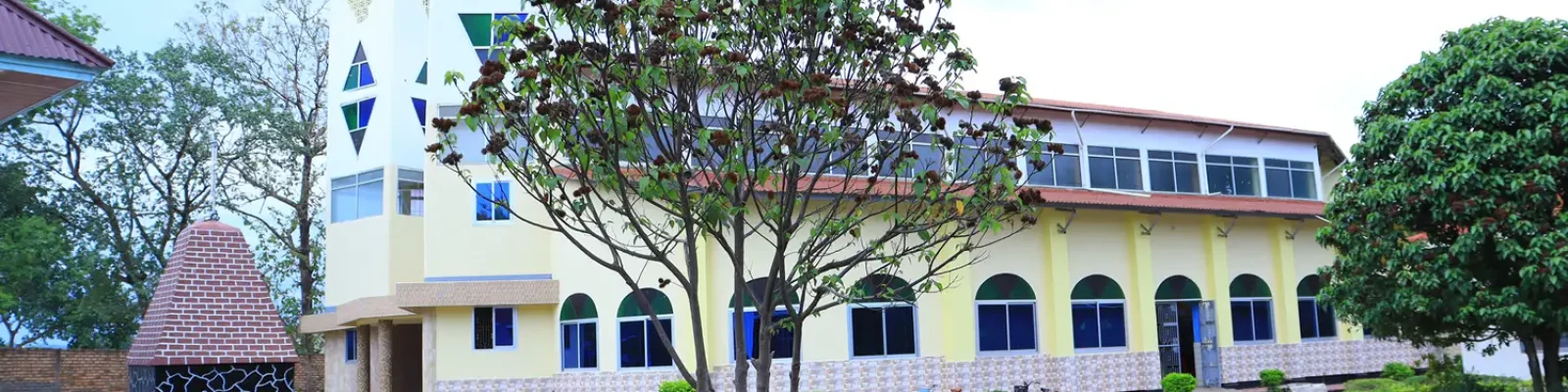
VISION: DIRA
The vision of the Catholic Archdiocese of Mbeya is to achieve excellence in holistic formation and conversion, thereby fostering the growth of the Kingdom of God on Earth.
Dira ya Jimbo Kuu Katoliki la Mbeya ni kufikia ubora katika malezi jumuishi na wongofu wa kweli, ili kustawisha na kukuza Ufalme wa Mungu hapa duniani.
MISSION: UTUME
We strive for excellence in formation, evangelization, and service, guided by Gospel values, to transform lives and society, and build God’s Kingdom on Earth.
Tukiongozwa na mafundisho na maadili ya Injili, tunajitahidi kwa ubora katika malezi, uinjilishaji na huduma, ili kugeuza maisha na jamii, na kuujenga Ufalme wa Mungu hapa duniani.
CORE VALUES: TUNU
 Faithfulness: Uaminifu
Excellence: Ubora
Compassion: Huruma
Community: Ushirika/Jumuiya
Service: Huduma
Discipleship: Ufuasi wa Kristo
HISTORY: HISTORIA
Historical Details
History
The following are the specific milestones in the rich history of the Catholic Archdiocese of Mbeya.
Its primary evangelisation was initiated by the Missionaries of Africa, popularly known as the White Fathers (WF). The pioneers starting from Zimba parish in the diocese of Sumbawanga crossed Momba river and started the first mission on Mbeya side at Mkulwe in 1899.
On 18th July 1932 there was established as Missio sui juris of Tukuyu (from Apostolic Vicariate of Tanganyika)
On 29th March 1938, the region was promoted to the Apostolic Prefecture of Tukuyu
On 14th July 1949 the status changed to Apostolic Vicariate of Mbeya / Mbeyaën(sis) (Latin)
On 25th March 1953 the circumscription was promoted to be the Diocese of Mbeya / Mbeyaën(sis) (Latin). It became one of the suffragans of Tabora)
On 25th March 1972, the Diocese of Mbeya lost a part of its territory to the newly established Diocese of Singida.
On 18th November 1987, the Diocese of Mbeya became the suffragan of Songea
On 21st December 2018, the Diocese of Mbeya was promoted to be the Metropolitan Archdiocese of Mbeya / Mbeyaën(sis) (Latin) (with suffragan sees Iringa and Sumbawanga).
On 22nd December 2023, the Metropolitan Archdiocese of Mbeya gained suffragan see, Mafinga
The Catholic Archdiocese of Mbeya is located in the South West of Tanzania, bordering Malawi and Zambia to the South and West respectively. The Malawi-Zambia highway crosses Mbeya town and diverts to Malawi and Zambia accordingly. Mbeya Region is now divided into two regions, known as Songwe Region and Mbeya. Hence Mbeya Archdiocese covers almost both of the regions. According to the National Census of 2022, the population of the Mbeya region is 2,343,754. The Catholics are 316,471. The total area coverage is 60,348 square kilometres, of which 97.2% is land and only 2.8% is water. About 80% of the inhabitants are subsistence farmers who cultivate maize, beans, sunflowers, groundnuts, paddy for food, and coffee in some places, cocoa in some places, and banana for cash. In general, the majority are poor who depend on subsistence farming and a bit of cattle keeping. The main tribes of Mbeya are Safwa, Nyakyusa, Wanyiha, Bungu, Kimbu, Nyamwanga, Wasangu, and Ndali. Mbeya has attracted some people from far like Sukuma, Masai, Kinga, Hehe, and others who migrated in the area for farming and cattle keeping.
The Archdiocese has 71 parishes, which are scattered all over the Archdiocese, serving a total population of 2,343,754, while Catholics are 316,471. On the other side, the Archdiocese has a total number of about 141 priests, while out of that, about 35 are working or studying outside the Archdiocese. Hence, the total number of priests working in the Archdiocese is 106.
OBJECTIVES: MALENGO
Our Core Objectives
1. Spiritual Growth: Foster spiritual formation and conversion through prayer, sacraments, and evangelization.
2. Community Building: Strengthen vibrant, inclusive communities that support spiritual growth and service.
3. Education & Formation: Provide holistic formation programs for clergy, the religious, and the laity, particularly, the youth.
4. Service & Outreach: Engage in compassionate service to the poor, marginalized, and needy.
5. Evangelization: Proclaim Christ’s message and values in society.
6. Religious Life: Support and nurture vocations, empowering religious men and women in their ministries.
7. Ecumenical & Interfaith Dialogue: Foster understanding, respect, and collaboration with non-Catholics and people of other faiths.
8. Education: Promote quality education, values, and Catholic identity in church schools and institutions.
9. Health & Wellness: Provide quality healthcare services, promoting holistic well-being and dignity.
10. Environmental Stewardship: Promote eco-friendly practices, caring for creation, and sustainability.
11. Peacebuilding & Justice: Advocate for justice, peace, and reconciliation, addressing social issues.
12. Youth & Family Ministry: Empower youth and families, supporting their spiritual, emotional, and social growth.
Malengo Yetu Mkuu
1. Ukuaji wa Kiroho: Kukuza malezi ya kiroho na wongofu kupitia sala, sakramenti, na uinjilishaji.
2. Ujenzi wa Jumuiya: Kustawisha na kuimarisha jumuiya zenye uhai zinazosaidia ukuaji wa kiroho na huduma.
3. Elimu na Malezi: Kutoa programu za malezi kamili kwa makreli, watawa, na walei, hususan, watoto na vijana.
4. Huduma na Utumishi: Kushiriki katika huduma ya huruma kwa maskini, wanaoonewa, na wenye mahitaji.
5. Uinjilishaji: Kuhubiri ujumbe na tunu za Kristo katika jamii.
6. Maisha ya Kiroho: Kusaidia na kukuza wito, kuwawezesha watawa wa kiume na wa kike katika huduma zao.
7. Mazungumzano ya Kidini na Kiekumeni: Kukuza uelewa, heshima, na ushirikiano na watu wasio wa dini ya Kikatoliki.
8. Elimu: Kukuza elimu bora, maadili, na utambulisho wa Kikatoliki katika shule na taasisi za Kanisa.
9. Afya na Ustawi: Kutoa huduma bora za afya, kukuza ustawi kamili na utu.
10. Utunzaji wa Mazingira: Kukuza tabia rafiki kwa mazingira, kutunza na kuendeleza uumbaji.
11. Amani na Haki: Kutetea haki, amani, na maridhiano, na kushughulikia masuala ya kijamii.
12. Huduma kwa Vijana na Familia: Kuwawezesha vijana na familia kwa kusaidia ukuaji wao wa kiroho, kihisia, na kijamii.